

Is the current escalation in southern Yemen just another chapter in a long-running civil war, or are we witnessing something fundamentally different—the institutional breakdown of regional alliances and the Middle East’s shift into an era of open competition among mid-sized powers, where proxy forces slip their handlers and begin to operate by their own logic?
That question matters far beyond Yemen. It cuts to the heart of a broader transformation in the region’s security architecture, stretching from the Middle East to the Indian Ocean. Yemen is no longer a peripheral battlefield. It has become a compressed mirror of deeper structural shifts: the fragmentation of sovereignty, rivalry among patrons, the erosion of coalition discipline, and the growing reliance on nonstate actors at a time when global arbitration is weakening.
For nearly a decade, Yemen’s civil war lingered in the background of international attention—another chronic crisis on the margins of the Arabian Peninsula. But events in late 2025 pushed the conflict into a new phase. Saudi airstrikes on the port of Mukalla, the destruction of a military shipment delivered by Emirati-linked vessels, and the subsequent response by the Southern Transitional Council turned a local clash into a stark demonstration of how easily even the most durable regional alliances can unravel in the twenty-first century.
Yemen today is not merely a country torn apart by war. It sits at the intersection of energy routes, trade flows, and ideological fault lines, where the interests of Riyadh and Abu Dhabi—two capitals that until recently saw themselves as the backbone of Arab unity—now collide head-on.
An Alliance Cracked by Ambition
For decades, Saudi Arabia and the United Arab Emirates moved in lockstep. One was the region’s oil powerhouse and guardian of religious legitimacy; the other, a rising hub of finance, technology, and logistics. Beneath the surface of solidarity, however, competition was always there.
Riyadh cast itself as the region’s ultimate arbiter, setting the terms of Gulf security and politics. Abu Dhabi, meanwhile, quietly built its own architecture of influence—through ports, military bases, and proxy networks stretching from the Horn of Africa to the Indian Ocean.
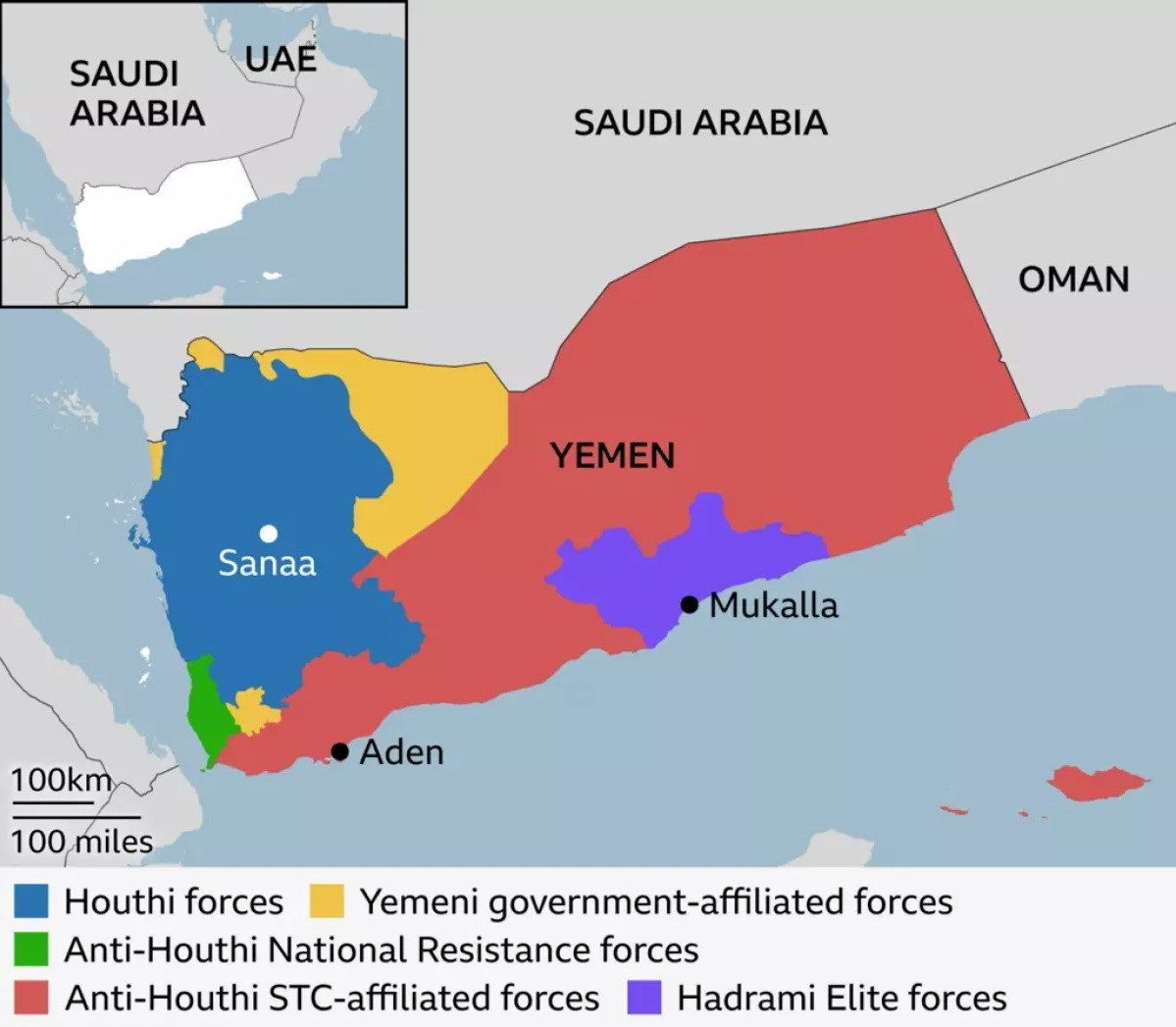
Yemen became the place where these two strategies finally collided. Saudi Arabia wanted a unified, governable Yemen—a buffer state that posed no threat to its southern border. The UAE sought the opposite: a fragmented Yemen carved into zones of influence, giving Abu Dhabi direct access to the sea and control over key ports such as Aden, Mukalla, and Shihr.
The Southern Transitional Council, armed and financed by the UAE, emerged as the primary instrument of that vision. Its offensive in Hadramawt in December 2025 was not an improvisation but the culmination of a long, deliberate campaign.
From Coalition to Confrontation
Since 2015, Saudi Arabia and the UAE had fought side by side against the Iran-backed Houthis. Yet from the outset, their endgames diverged. Riyadh focused on restoring the internationally recognized government. Abu Dhabi concentrated on building leverage in the south.
When STC forces moved into the oil-rich areas of Hadramawt, Saudi officials saw it as a direct challenge. Airstrikes on the port of Mukalla marked the first time the Saudi military openly targeted infrastructure tied to a former ally. The Emirati response—a formal announcement of troop withdrawals—changed little on the ground.
The pullout of a limited special forces contingent did nothing to alter the reality. Abu Dhabi still controls a web of southern militias, along with the logistics, financing, and trained personnel that sustain them.
This phase of the conflict made one thing clear: the coalition forged against the Houthis no longer exists. Yemen has become a battleground for leadership within the Sunni camp itself.
Beyond the Binary View of Yemen
Since the civil war began in 2014, Yemen has often been framed in starkly binary terms: Iran-backed Houthis on one side, an internationally recognized government supported by a Saudi-led coalition on the other. That narrative, convenient for diplomatic briefs and media sound bites, has long since lost its explanatory power.
By 2022–2025, Yemen had evolved into a layered mosaic of power centers, each with its own institutional logic, sources of legitimacy, and external patrons. The creation of the Presidential Leadership Council was meant to impose some order on this complexity. In practice, it merely formalized the absence of a true decision-making center.
The Southern Transitional Council, though nominally folded into this structure, never abandoned its strategic objective: the restoration of an independent South Yemen. Participation in national institutions was tactical—a way to legitimize territorial control, secure resources, and preserve freedom of maneuver.
The STC’s December offensive and its rapid consolidation of control over Hadramawt and al-Mahra were not the actions of a rogue militia. They were the logical extension of a long-term strategy of institutional buildup. This was not guerrilla expansion but an attempt at territorial consolidation, followed by the construction of quasi-state institutions—from security forces to fiscal administration.

Hadramawt as a Strategic Prize
On the map, Yemen looks like a periphery. In reality, its southern ports sit astride the lifelines of global trade. The Bab el-Mandeb Strait—a narrow chokepoint between the Red Sea and the Gulf of Aden—handles roughly nine percent of global seaborne oil and more than six million barrels of petroleum products each day. Any disruption there ripples instantly through prices and insurance premiums in London, Singapore, and New York.
That is why the strikes on Mukalla triggered immediate market reactions. Brent crude jumped seven percent, and insurance premiums for transiting the strait surged by a third. Yemen ceased to be “someone else’s war.” It became a global risk.
For Saudi Arabia, control over Hadramawt is about border security and energy stability. For the UAE, it is a tool of strategic autonomy—a platform for projecting power into the Horn of Africa and the Indian Ocean. This conflict is not about oil itself, but about routes, chokepoints, and control over the maritime corridors of the twenty-first century.
The choice of Hadramawt as the focal point of the STC’s advance was no accident. The province is more than oil-rich territory; it is a geoeconomic and geostrategic hub.
First, it offers access to the southern coast of the Arabian Sea and, by extension, the Indian Ocean trade routes, bypassing the bottlenecks of the Red Sea. Control of ports like Mukalla allows direct influence over commercial and energy flows.
Second, its land border with Saudi Arabia gives the region outsized importance for Riyadh’s national security. Any autonomous or hostile authority in Hadramawt is automatically viewed as a potential source of threats—from smuggling to military infiltration.
Third, Hadramawt has a strong regional identity and a long history of weak integration into centralized Yemeni institutions. That lowers the political and administrative costs of building an alternative state project.
STC control over Hadramawt, then, is not a local victory. It is an attempt to reset the balance of power in southern Yemen and impose a new reality on both domestic and external actors.
Saudi Arabia: From Coalition Hegemon to Hostage of Fragmentation
Yemen has become a laboratory for modern asymmetric warfare. Saudi Arabia relies on precision airstrikes, intelligence, and drones. The UAE bets on proxies and private military actors operating under the banner of counterterrorism.
According to analysts at the Center for Strategic and International Studies, Abu Dhabi has been constructing a “ring of control” around the Red Sea since at least 2019—a network of bases and ports enabling presence without overt intervention. Military advisers and contracts, often cloaked as investment projects, operate in Eritrea, Somalia, and Djibouti. Yemen is a critical link in that chain.
Riyadh’s strike on Mukalla was more than retaliation against separatists. It was an attempt to shatter the Emirati architecture of influence and reclaim Saudi Arabia’s role as the central coordinator of Middle Eastern security. Yet the harder Saudi Arabia pushes, the stronger the pushback from Emirati-backed proxies—and the more systemic the confrontation becomes.
Saudi Arabia’s response to the STC offensive and the subsequent airstrikes signal a deeper shift in strategy. Riyadh now finds itself in a paradoxical position: formally leading the anti-Houthi coalition while having lost control over its internal dynamics.
The logic of Saudi intervention in 2015 was built on a classic model of external stabilization—limited military pressure, restoration of a central government, and containment of Iranian influence. But years of stalemate, mounting humanitarian costs, and the absence of a decisive outcome hollowed out that model.
By 2023–2024, Saudi Arabia began pivoting toward de-escalation with the Houthis, treating them less as an existential threat than as a factor to be managed. Within this framework, the overriding goal became preventing the collapse of Yemen as a state, even in a highly decentralized form.
The STC’s separatist agenda runs directly counter to that approach. Emirati backing for the council turns an internal Yemeni struggle into a problem of interstate rivalry—an outcome Riyadh finds fundamentally unacceptable.
The airstrikes on Mukalla, including attacks on infrastructure linked to alleged Emirati arms deliveries, were aimed less at the STC than at Abu Dhabi itself. They were a signal that Saudi Arabia is prepared to move from quiet frustration to open coercion against the actions of a former ally.
The UAE: A Strategy of Fragmentation and Pragmatic Control
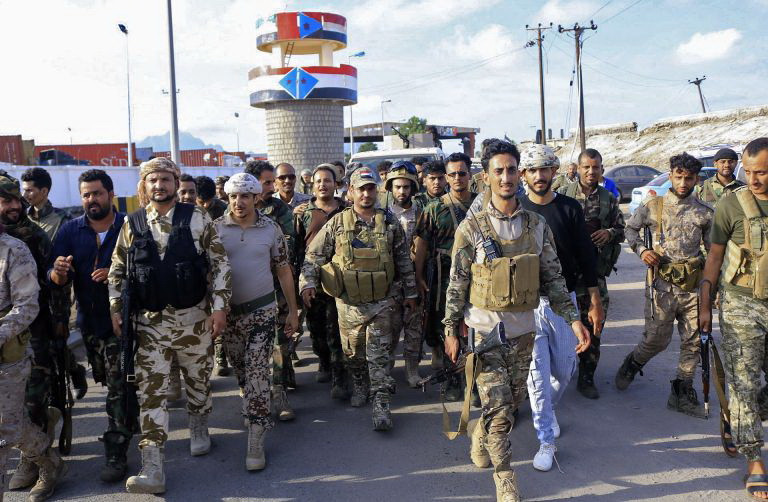
From the outset, the United Arab Emirates pursued a Yemen policy markedly different from Saudi Arabia’s. Unlike Riyadh, Abu Dhabi never invested in the restoration of a strong, centralized Yemeni state. Instead, Emirati strategy has consistently focused on building a network of loyal actors along the coastline and across key logistical chokepoints.
Backing the Southern Transitional Council is integral to that approach. A southern Yemen organized as an autonomous or semi-autonomous entity offers the UAE a bundle of advantages at once: control over ports, leverage over maritime routes, reduced dependence on Saudi infrastructure, and the creation of a buffer zone separating Riyadh from zones of chronic instability.
The formal withdrawal of Emirati troops announced in late December should be read as an institutional maneuver, not a genuine retreat. The UAE long ago shifted from overt military presence to a model of indirect control—operating through local forces, private military structures, financial pipelines, and political patronage.
In this context, public statements about de-escalation and support for international peace processes function largely as diplomatic camouflage, designed to cap reputational costs without abandoning core strategic objectives.
An Economy on the Brink
For Yemenis themselves, the war has been nothing short of catastrophic. According to World Bank estimates, damage to infrastructure has surpassed $130 billion. The national currency has lost two-thirds of its value, and roughly 80 percent of the population now depends on humanitarian assistance.
Ports lie in ruins, power facilities are idle, and state revenues have all but vanished. Hadramawt—once among the country’s most prosperous regions—has become a battleground over oil fields and security contracts.
International agencies warn that if southern provinces remain under blockade, Yemen could face a renewed wave of famine. Yet humanitarian aid addresses symptoms, not causes. As long as Yemen is treated primarily as a chessboard for external players, meaningful recovery will remain out of reach.
The African Flank of Instability
The Yemeni crisis does not stop at the shoreline. Its reverberations are already being felt across the Red Sea. Somalia, Eritrea, and Sudan are part of the same destabilizing arc: Emirati bases in Assab and Berbera, Saudi investments tied to Sudanese gold, Somali militias funded through opaque financial channels. Together, these elements form a widening belt of insecurity stretching from the Red Sea to the Indian Ocean.
What was once seen as the strategic rear of the Gulf is increasingly becoming an extension of the front line. The deeper Saudi Arabia and the UAE sink into rivalry, the greater the risk that the conflict will spill decisively into East Africa.
The End of Coalition Discipline as a Systemic Trend
The rupture between Saudi Arabia and the UAE in Yemen is not an anomaly. It fits a broader regional pattern: the erosion of coalition discipline across the Middle East.
Regional alliances are now increasingly ad hoc and transactional, lacking a shared strategic identity. A common adversary—whether the Houthis, extremist groups, or Iranian influence—no longer suffices to hold coalitions together when long-term interests diverge.
Yemen has become the arena where these contradictions surfaced most starkly. Saudi airstrikes on assets associated with Emirati-backed networks mark the end of an era of managed disagreements and the beginning of open competition.
Nonstate Actors as Quasi-Subjects of International Politics
The defining feature of the current phase of the Yemeni conflict is that nonstate actors have ceased to be mere instruments of external patrons. The Southern Transitional Council has evolved from a foreign-backed armed group into a quasi-political subject with its own strategy, institutional memory, and autonomous decision-making logic.
This sets today’s Yemen apart from the proxy wars of the late twentieth century. The STC does not simply execute Emirati directives; it operates within an asymmetric partnership. The UAE provides resources, political cover, and access to international channels. The STC delivers territorial control, local legitimacy, and governance on the ground. But this relationship lacks a rigid chain of command.
Such arrangements are emblematic of an era marked by the erosion of state sovereignty, in which armed movements assume functions once monopolized by governments—border control, taxation, security provision, and even external relations. Yemen has become a laboratory of a post-Westphalian reality, where the very notion of a “state actor” is increasingly blurred.
Crucially, the growing autonomy of the STC raises strategic risks not only for Saudi Arabia but also for the UAE itself. A patron-backed actor with genuine political agency may, over time, begin to pursue goals that diverge from those of its sponsor—especially as the international environment shifts.
The Degradation of International Law and the Crisis of Legitimacy
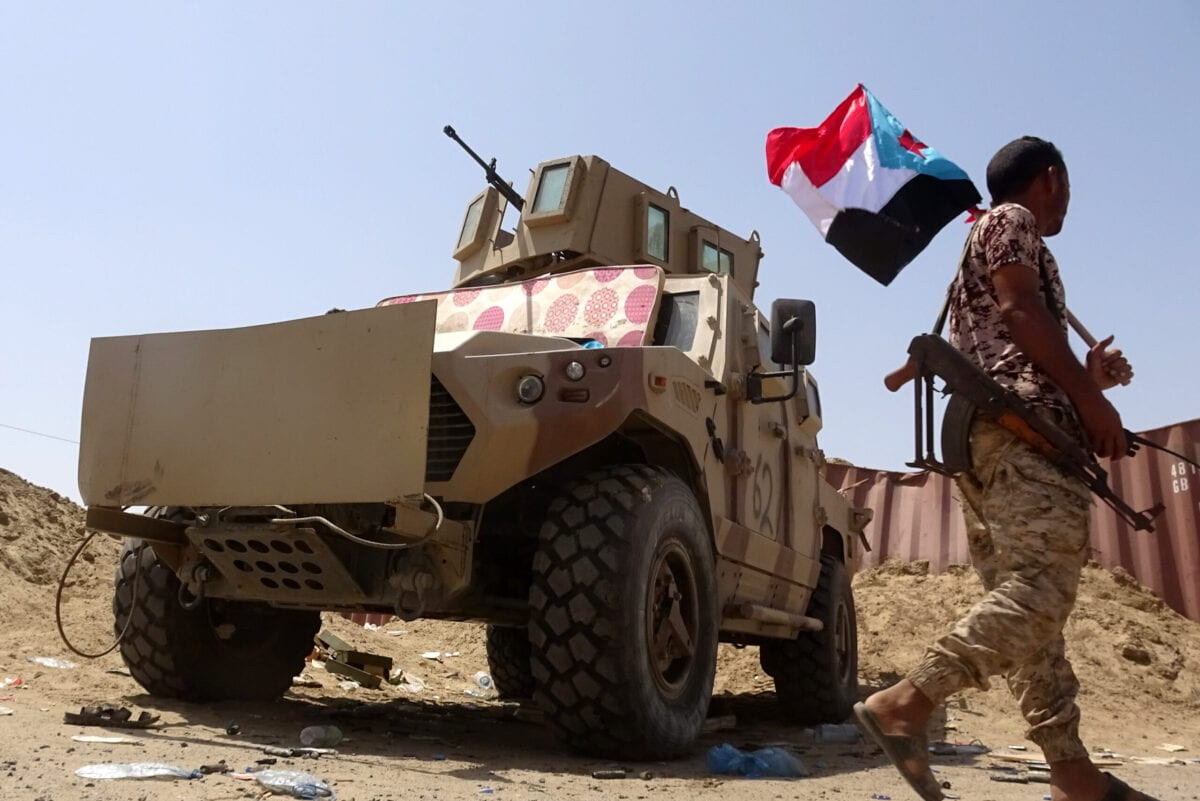
The escalation around Mukalla and Hadramawt exposes a deep crisis in the legal framework underpinning Yemen’s peace process. Formally, the international community continues to recognize a single Yemeni government. In practice, control over territory, infrastructure, and armed forces is fragmented among competing power centers.
Airstrikes on ports, the disabling of maritime navigation systems, the nullification of joint defense arrangements—all of this unfolds in a legal gray zone where traditional concepts of sovereignty, consent, and intervention lose their operational meaning.
Under classical international law, Emirati support for the STC can be framed as interference in the internal affairs of a sovereign state. The same logic, however, applies to Saudi Arabia’s military campaign, which since 2015 has stretched well beyond a strict collective-security mandate.
Yemen has effectively fallen into a legal vacuum, where legitimacy is determined less by norms than by power balances and external backing. This sets a dangerous precedent, lowering the threshold for the use of force and further weakening international institutions as credible arbiters.
The Geoeconomic Dimension: Ports, Oil, and Logistics
One of the most persistent analytical blind spots in interpreting the Yemeni conflict is the underestimation of its geoeconomic dimension. Control over southern Yemeni ports is not a secondary issue; it sits at the core of the strategic rivalry.
Mukalla, Aden, and other coastal hubs offer direct access to the Indian Ocean, bypassing the congested and increasingly vulnerable routes of the Red Sea and the Suez Canal. In an era of rising global instability and the militarization of sea lanes, alternative logistical corridors command a premium.
For the UAE—whose economic model rests on its role as a global trade and transit hub—control over, or influence within, these ports is a strategic imperative. Southern Yemen is viewed as an extension of the Emirati maritime network, stretching from the Horn of Africa into the Indian Ocean.
Saudi Arabia sees this expansion very differently. For Riyadh, the loss of influence over Yemen’s southern ports translates into greater dependence on external routes and a reduction in strategic depth.
The struggle over the STC, then, is not merely political or military. It is a structural economic conflict between two competing models of regional development—and Yemen is where that clash has become impossible to ignore.
Regional Context: From Yemen to the Architecture of the Indian Ocean
The escalation in Yemen cannot be understood in isolation from the broader dynamics unfolding across the Indian Ocean region. Intensifying competition among regional powers for control over sea lanes, port infrastructure, and energy flows is turning this vast maritime space into one of the central arenas of twenty-first-century global politics.
The erosion of old alliances, the rising influence of mid-sized powers, and the weakening of universal security mechanisms have created an environment in which local conflicts rapidly acquire transregional significance. In this framework, Yemen is not a backwater but a strategic junction where the interests of the Middle East, East Africa, and South Asia intersect.
A critical variable here is the growing uncertainty surrounding external arbitration. As global powers scale back their direct management of regional conflicts, a vacuum has emerged—one increasingly filled by regional actors pursuing their own, often incompatible, strategies.
Scenario Analysis: Three Possible Trajectories
The first scenario is managed fragmentation. Yemen effectively solidifies as a patchwork of autonomous entities. Saudi Arabia and the UAE arrive at an informal division of spheres of influence, limiting direct confrontation. The Southern Transitional Council institutionalizes its control over the south, the Houthis retain the north, and the central government performs largely symbolic functions. Violence diminishes, but instability is frozen in place.
The second scenario is escalation between patrons. Saudi Arabia and the UAE slide into systematic confrontation via proxies, expanding the scope of fighting, destabilizing border regions, and amplifying transnational threats. Yemen becomes the theater of a prolonged rivalry, exacting enormous humanitarian and economic costs.
The third scenario is a rebalancing of the regional order. Under mounting economic and reputational pressure, the parties return to multilateral settlement formats that accept deep decentralization while preserving Yemen’s formal unity. Institutionally complex, this option is also the most sustainable over the long term.
Conclusions and Strategic Recommendations
- The Yemeni conflict has entered a phase in which the primary driver is no longer ideology, but competition among regional powers for control over space, resources, and logistics.
- The breakdown of coalition discipline between Saudi Arabia and the UAE reflects a wider crisis of regional alliances and the rise of transactional partnerships.
- Nonstate actors such as the Southern Transitional Council have achieved a level of autonomy that makes them independent strategic players rather than mere tools of external influence.
- The international legal framework for conflict resolution has effectively lost its traction, necessitating a rethink of legitimacy and mediation.
- The geoeconomic dimension—ports, maritime routes, and energy corridors—is central to understanding the motivations of all parties.
Recommendations
Regional powers should move away from zero-sum logic toward institutionalized mechanisms for delineating interests.
International mediators must acknowledge the reality of Yemen’s decentralization and adapt negotiation formats accordingly.
Investors and external stakeholders should factor in elevated political and legal risks, as well as the autonomy of local actors, when planning long-term projects.
Forecast: A Decade of Fragmentation
Over the next five years, Yemen is unlikely to reconstitute itself as a functioning state.
The country will remain divided between a Houthi-controlled north backed by Iran and a south dominated by the STC under Emirati patronage. Saudi Arabia will seek to retain influence over central regions and negotiation tracks, but without genuine territorial control.
The result will be the institutionalization of chaos. Yemen will harden into a constellation of autonomous enclaves, and the Bab el-Mandeb Strait will become a permanent risk zone. For the global economy, this means sustained volatility in oil prices, rising shipping insurance premiums, and the emergence of the Red Sea as a new line of strategic vulnerability.
In this environment, Tehran gains opportunities to entrench its proxies along the western edge of the Arabian Peninsula. Washington, by contrast, faces the challenge of protecting allies without being drawn into another conflict. China is likely to expand its diplomatic mediation, positioning itself as a stabilizer in regions where Western influence is receding.
Yemen as a Mirror of the Era
The conflict in Yemen is no longer about Yemen. It is a reflection of a new reality in which the line between alliance and rivalry has blurred, and the very concept of a coalition is losing meaning. Saudi Arabia and the UAE, once architects of a shared axis of power, now find themselves on opposite sides of a strategic divide.
Yemen has become a laboratory of a new Middle Eastern politics—fragmented, pragmatic, and stripped of ideology. There are no longer friends or enemies here, only competing interests bound together by sea lanes, oil, and the routes of global commerce.
That is why events in Mukalla are not an episode but a signal: a signal that the Middle East is entering an era of post-coalition geopolitics, where allies no longer exist and partnerships are nothing more than temporary alignments of interest.