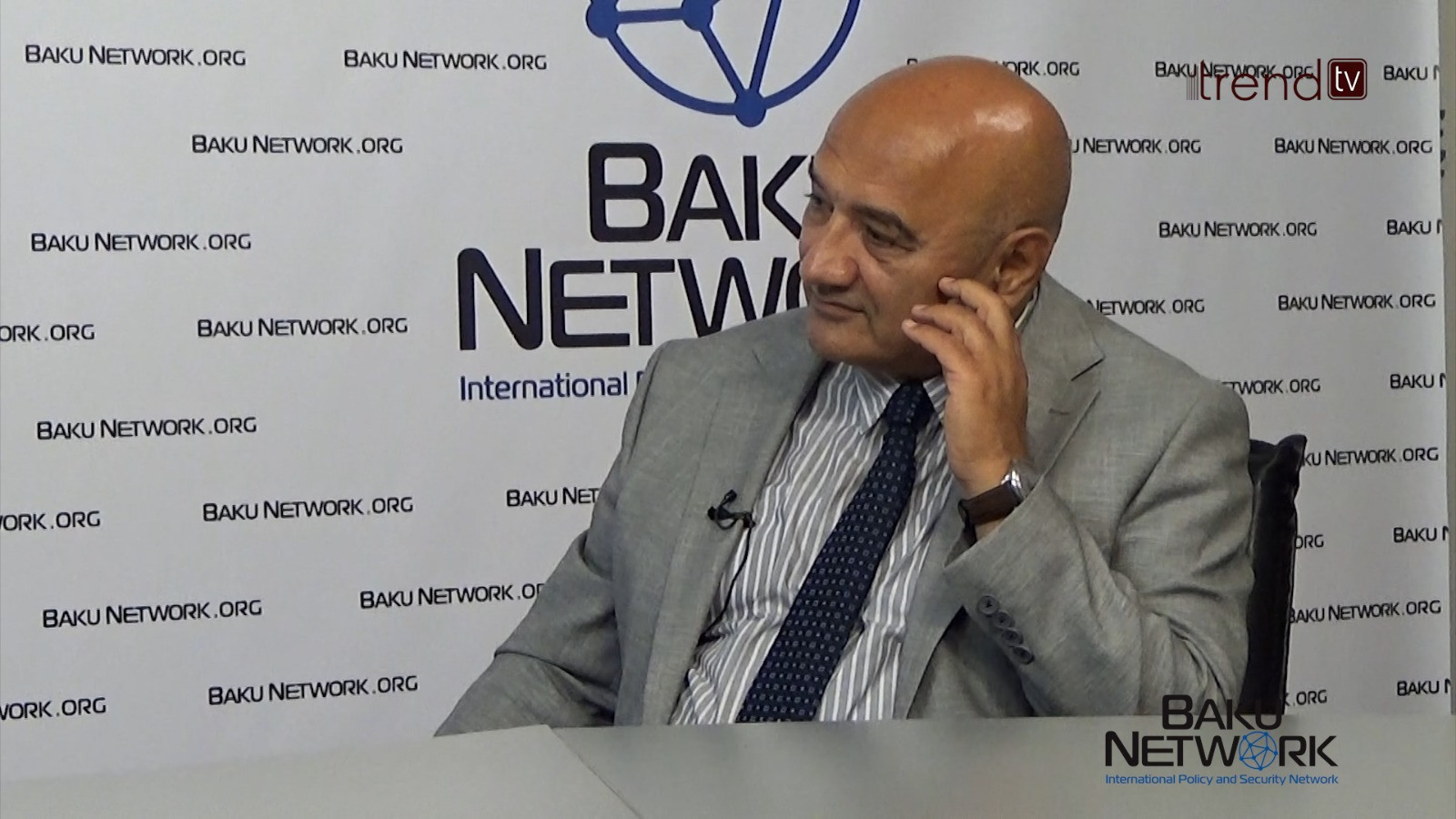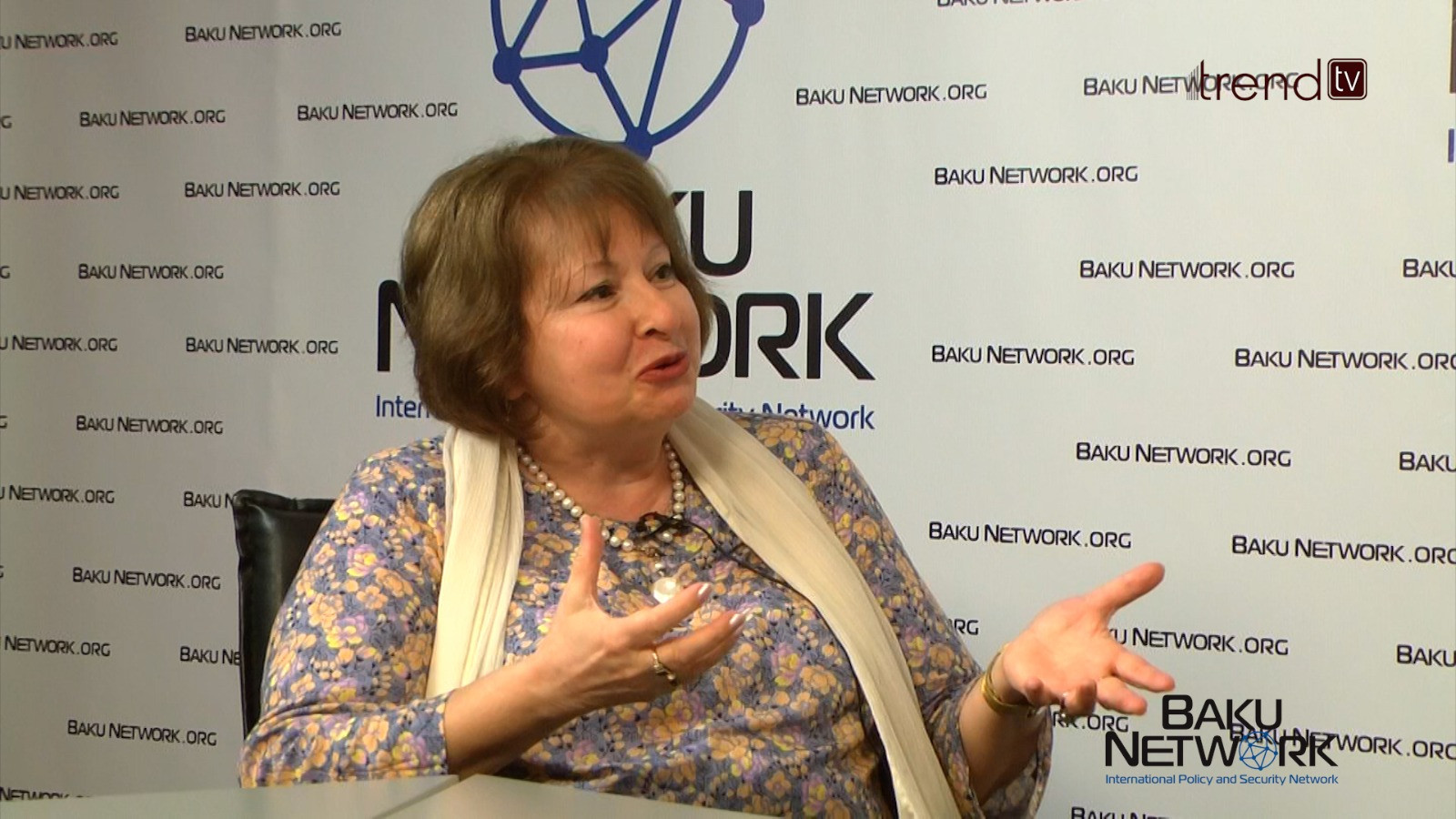

A new episode of the video program “Dialogue with Tofig Abbasov” has been released on the Baku Network expert platform.
The guest of the program was Honored Art Worker of Azerbaijan, musicologist, and professor at the Uzeyir Hajibeyli Baku Academy of Music, Zumrud Dadashzade.
During the conversation, she spoke about her attitude toward artistic experimentation, Baku's role as a center of contemporary music, her experiences during the Karabakh conflict, and the contribution of cultural figures to building lasting peace in the South Caucasus.
Speaking about contemporary art, Zumrud Dadashzade emphasized that the pursuit of innovation has always been her professional guiding principle.
“I devote my work to contemporary and avant-garde music, the kind that is born here and now. Igor Stravinsky once made the famous observation that the music of today is the most fascinating moment in history, the most exciting and compelling. Composers and musicians striving to reach new horizons have always inspired and attracted me,” she said.
At the same time, the professor stressed that tradition remains the foundation of culture but must continually be renewed. According to her, Azerbaijan and Baku have always been “the quiet harbor where the ships of contemporary music could find safe anchorage,” even during periods when the avant-garde was not welcomed.
“Thanks to Gara Garayev and his associates, we have always remained connected to the newest developments in music and the arts. Today we are witnessing how the seeds he planted have grown into a flourishing legacy,” the guest noted.
A separate part of the discussion focused on the late 1980s and early 1990s, when Azerbaijan faced territorial claims and an intensive propaganda campaign.
“There was an atmosphere of euphoria. We were inspired and believed that only a bright future lay ahead. Then everything suddenly turned against us: territorial claims, an aggressive propaganda campaign targeting Azerbaijani identity and culture, and assertions that we were supposedly ‘nomads,’” Zumrud Dadashzade recalled.
According to her, the Azerbaijani intelligentsia sought every possible way to communicate the truth to the international community.
“I remember calling composers' unions, members of parliament, trying to explain what was happening. My father called the writer Vasil Bykau. Others reached out to Ales Adamovich. I managed to contact the Composers' Union in Lithuania and spoke with its secretary. He listened to me very attentively. A year later, they themselves faced a similar situation and understood exactly what I had been talking about. Then came Khojaly. We endured many tragedies,” she said.
Addressing disputes over the ownership of musical heritage, the professor referred to archival material she discovered from a 1915 issue of the Armenian-language Tiflis newspaper Mshak.
“In that publication, the authors spoke enthusiastically about Arshin Mal Alan and wrote that Eastern music was deeply meaningful to them because they had lived alongside Turkic peoples and Persians for centuries, and that its melancholic melodies nourished the soul. They acknowledged this themselves,” she emphasized.
Zumrud Dadashzade also recalled an episode during a roundtable discussion in Vilnius in 2003, where she challenged claims that all Azerbaijani composers had supposedly “studied under Aram Khachaturian.”
“I reminded everyone that Gara Garayev was a student of Shostakovich, while Arif Melikov was a student of Garayev. I also had with me a book containing Khachaturian's own words: ‘At the very beginning of my creative journey, Uzeyir Hajibeyli helped me, guided me, and offered his support,’” the professor noted.
Speaking about the humanistic character of the Azerbaijani people, she referred to Mirza Jalil Mammadguluzade's play Kamancha, whose protagonist forgives an Armenian kamancha player for the sake of music during the violent clashes of 1918-1920.
Turning to the present, the guest emphasized that Azerbaijan's peacebuilding efforts have been truly remarkable and have already received international recognition, while the South Caucasus has been given a historic opportunity.
In the professor's view, the struggle today must focus on transforming public consciousness, and artists and writers have a crucial role to play in that process.
“We are neighbors, and there is no alternative to peace. None of us is going to move to another planet. Geography is our destiny. We must work with young people thoughtfully, tactfully, and diplomatically, relying on historical knowledge while keeping our eyes firmly fixed on the future,” Zumrud Dadashzade concluded.
The full video recording of the program is presented to our readers.