
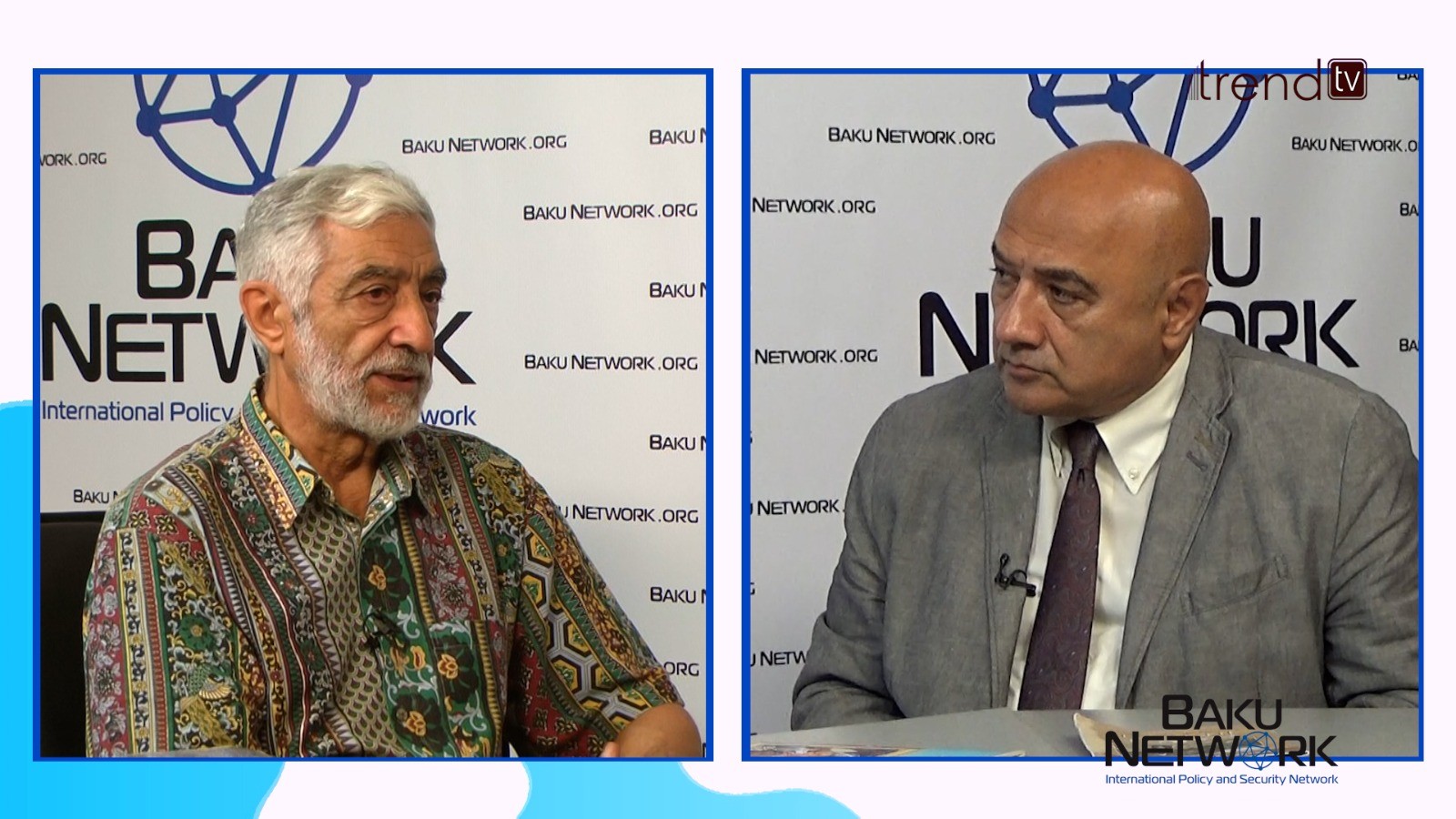
In a new episode of the analytical video series Dialogue with Tofiq Abbasov, aired on the Baku Network platform, renowned Azerbaijani artist Ashraf Heybatov shares his views on cultural diplomacy, the role of art in turbulent times, and why Azerbaijani voices must be heard on the global stage.
Heybatov, who holds the title of People's Artist of Azerbaijan and chairs the European Association of Azerbaijani Cultural Figures, struck a reflective tone as he spoke about the current state of the world. “We’ve entered a period of instability and unpredictability,” he said. “That’s exactly when art becomes essential. My mission is to spread positivity and represent my homeland—Azerbaijan.”
Art, he insists, transcends borders. “Artists, writers, musicians—we’re the bridges between nations,” he said, emphasizing that culture must pave new paths for connection, ones “stronger and more enduring” than before.
Heybatov’s art has appeared in venues as varied and high-profile as the Vatican, NATO headquarters, and the OSCE. He’s rubbed shoulders with global leaders, from former German Chancellor Gerhard Schröder to Nobel laureate Günter Grass, whose portrait he personally painted.
These encounters, Heybatov noted, serve a larger purpose: to ensure that “Azerbaijan” is not just heard but remembered. “Every exhibition, every handshake is a chance to remind the world of our rich culture,” he said.
The conversation turned to growing far-right sentiment across Europe, with Heybatov singling out Eastern Germany as a hotspot. He referenced the rise of the PEGIDA movement and warned of the dangers of fascist ideologies regaining traction. “We’ve seen where that path leads. The 20th century taught us the cost,” he said.
He also pointed to nationalist marches in Yerevan, including those near a monument to Garegin Nzhdeh, as disturbing signs. “Extremist forces continue to glorify figures with violent legacies,” he said, specifically referencing events in the region of Khankendi.
Heybatov recalled the Soviet era, when Azerbaijani and Armenian artists collaborated freely, unburdened by nationalist divisions. But by the 1980s, he noted, diaspora Armenian groups had begun pushing a separatist agenda in Nagorno-Karabakh, laying the groundwork for future conflict.
Today, he believes, cultural figures must step in where politics has failed. “We have a duty to seek out new avenues for peaceful dialogue. Humanist values must guide us,” he said.
Central to Heybatov’s work is the theme of historical memory. He is currently developing a series of graphic works dedicated to the 1918 March Genocide—massacres that remain a deeply painful chapter in Azerbaijani history. “Art isn’t just about painting landscapes or still lifes,” he said. “It’s also about telling the truth—especially about the tragedies that others might prefer to forget.”
Recently, Heybatov led a painting workshop with children in Lachin, encouraging them to depict their homeland. “Love for one’s country starts early,” he said, underlining the importance of cultural education.
Heybatov has also played a key role in exhibitions across the Turkic world, both in Azerbaijan and abroad. In Berlin, his projects have been opened with the support of Turkish diplomats—part of an ongoing effort to deepen cultural ties across nations.
Looking ahead, Heybatov remains clear-eyed about the role of the artist in the 21st century: “We’re not separate from the times we live in. We must speak the truth about our country and our history, build bridges between cultures, and foster patriotism through art. That’s the artist’s mission today.”